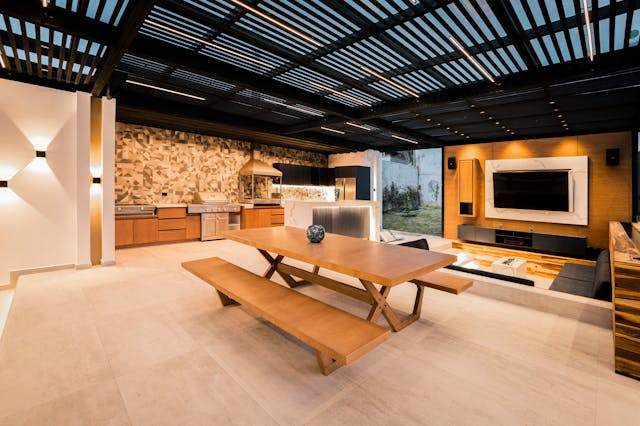
From the coast to the outback, backyards are starting to feel a bit different. Where houses used to sit empty for most of the year in many parts of Australia, often grand old places that were just too far from the city to make sense of, they’re now getting a new lease on life as outdoor spaces that people actually go to every day. The reason behind this shift is pretty simple: all sorts of things like rising property prices , changing routines and a growing desire for outdoor spaces that actually last are pushing homeowners to rethink what they want to get out of their outdoor area.
Outdoor Furniture Is Changing How Australian Backyards Work
Modern backyard design trends in Australia are now all about functionality. As property values continue to increase, lifestyles continue to change, and homeowners desire outdoor spaces that serve as an extension of the home rather than as a space left idle during the off-season, there is a focus on investment in high-quality, durable outdoor furniture. This furniture will last longer and have greater resale value. Renovation activity continues to grow with housing prices, with outdoor lounges Australia being one of the key focuses. More than 58% of homeowners focus on lounge-style seating during outdoor upgrades, with the outdoor furniture market itself in the multi-billion AUD range and growing by roughly 3–5% per year. This growth is supported by denser urban living and climate-driven outdoor habits. In addition, Houzz renovation data shows nearly 62% of homeowners allocate sizeable budgets, often between AUD 2,000 and AUD 8,000, into seating and modular furniture.
Smaller Backyards Are Changing Outdoor Layouts
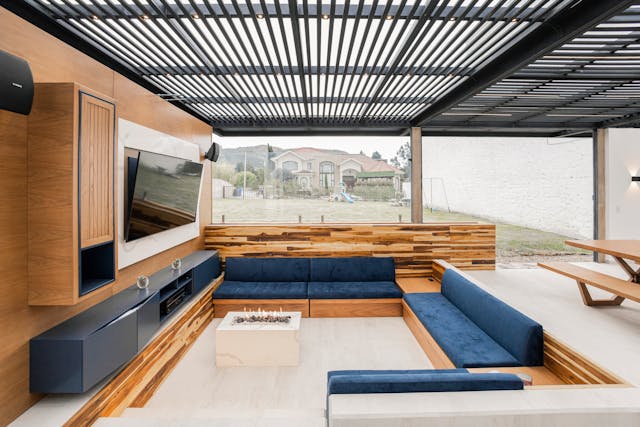
Now that shrinking the space in our backyards is starting to happen, its changing the way most homeowners and designers decide on how to lay out their outdoor space. With Australian block sizes having reduced by an average of 15% over the last 20 years, according to the ABS, it makes sense that modular outdoor furniture is getting used more. Flexible layouts that you can adjust to fit a smaller yard work a whole lot better than those rigid old-style arrangements. Landscape architects reckon that modular designs can save up to 30% of your outdoor space, by making the most of what you’ve got. In a lot of our suburbs too, the traditional “perfect lawn” is being dumped in favour of areas that do a few things at once. These zones take up 40-60% of the backyard, partly because of water conservation, but also because of how expensive it can be to keep a lawn looking good, just for maintenance alone that can cost anywhere between AUD 25 and AUD 40 per square metre per year.
Australian Weather Forces Smarter Material Choices
Material choice now plays a major role in outdoor furniture planning because Australian weather keeps exposing weak products fast. CSIRO data shows UV radiation levels across Australia can sit up to 15% higher than comparable regions in Europe and North America. This increases wear on untreated materials at a much quicker pace. That pressure has pushed powder-coated aluminium, teak, and UV-stabilised polyethylene into mainstream outdoor furniture production. Testing shows powder-coated aluminium can extend structural lifespan by around 8–12 years compared with untreated steel. Teak performs differently but still offers strong durability. It reduces moisture absorption by nearly 70% because of its natural oil resistance. Premium lounge sets often cost somewhere between AUD 1,500 and AUD 6,000. However, lifecycle studies suggest stronger materials can lower long-term costs by roughly 25–35% through reduced replacement frequency.
Technology Is Quietly Moving into Australian Backyards
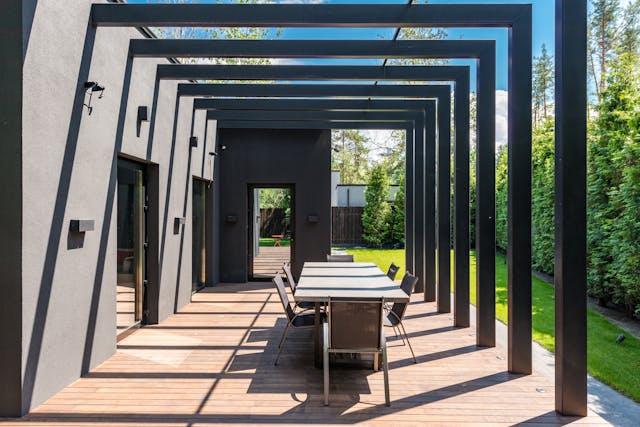
While the technology may not always draw attention to itself, it is starting to seep into outdoor living spaces. Smart lighting systems, outdoor heating modules, and solar-powered furniture components are quietly transforming how Australian backyards operate throughout the year. As households seek longer outdoor usability and lower energy consumption, this category continues to grow at a compound annual rate of roughly 6–8%. These systems extend outdoor use by 25–40 additional days per year during cooler periods. Traditional setups are less practical during these times. Solar-integrated installations typically cost between AUD 2,000 and AUD 7,000 but can reduce electricity use for outdoor lighting by up to 60%. Motion-sensor lighting takes efficiency to the next level by turning on only when spaces are occupied. This cuts unnecessary power use and makes outdoor areas more responsive to everyday living.
It is no longer only about the look of the backyard, but more about the function, efficiency, durability, and value of the space in the long term. Every change is nudging outdoor spaces closer to being an extension of the home itself. This is being driven by economic pressure, the environmental conditions, and expectations of the lifestyle. As a result, areas that were once considered nothing more than garden space are now being built with daily living in mind.